In this post2 sections
The video above is the one I send to anyone who asks me how window light actually behaves through a day. Watch it once and the rest of this post will make more sense.
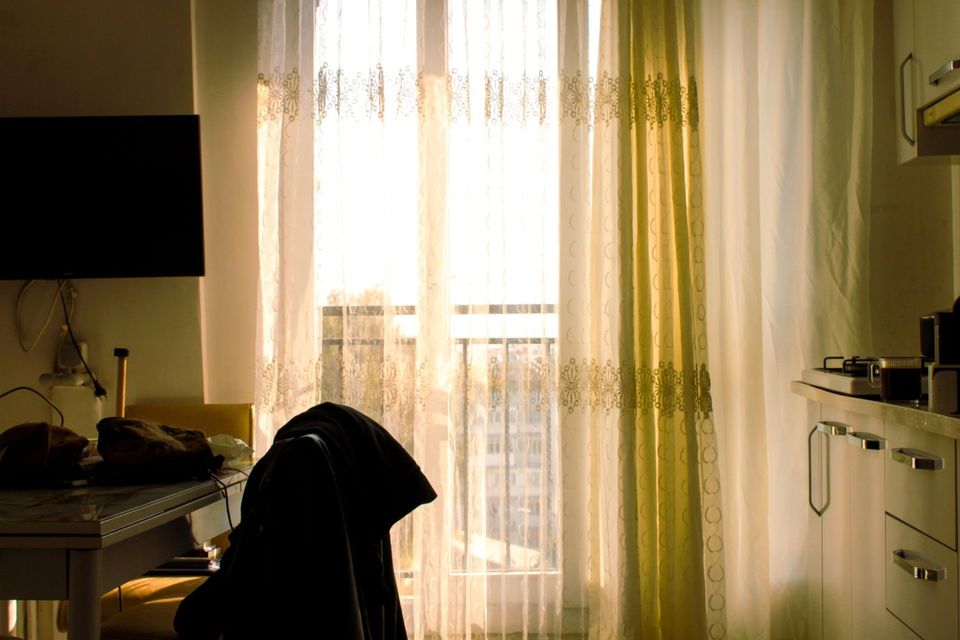
There is a flat in Leith where I have photographed the same family three times. The living room faces west, with a tall sash window and a white wall at right angles to it. For most of the day it is an ordinary room. At about four in the afternoon, in autumn, the sun drops below the building opposite and comes straight along the floor, hits the white wall, and the whole room turns into a softbox for forty minutes.
Finding the hour
I do not have a sun app. I ask the client three questions on the phone before I book: which way does the window face, is there anything tall outside it, and when do you find yourself drawing the blinds. The last one is the giveaway. People draw blinds against the light they would never think to photograph in.
If I cannot visit before the session, I ask for one phone photo of the room at the time they would like me to come. Not of them, of the room, with the lights off. I can tell in a second whether that hour is the right one, and I move the booking if it is not.
What changes in the picture
- Low sun across a floor lights the face from below as well as from the side, which is why people look rested in it.
- The colour warms, so I set white balance by the wall, not the window, or the skin goes orange.
- Shadows get long and interesting. I let them in. A shadow of a plant across a shoulder is a portrait of the afternoon.
A room with one good hour is better than a room that is fine all day. You just have to turn up at the right time.
I have never once had a client mind moving a session by an hour when I explained why. They are paying for the light as much as for me, and most of them have never been told that their own living room has it.
 From RaeWant more like this?Visit the blog feed for new posts and updates.View all posts
Filed under Light

Natural-light portrait photographer. I photograph people in their own rooms, gardens and doorways, and I teach the way I work: no flash, no studio, just reading the light that is already there.
More from Rae Lindqvist

Comments
Loading comments...